How the Instagram Algorithm Decides Who Sees Your Posts in 2026
The Algorithm Is Not One Thing
The first thing to understand: there is no single “Instagram algorithm.” Feed, Reels, Stories, and Explore each run their own ranking system, tuned for different goals. Feed cares about keeping you connected to people you know. Reels and Explore care about showing you entertaining content from accounts you have never heard of. That difference is exactly why a small account can blow up on Reels while its Feed posts barely leave its follower base.
In 2026, the broad logic has stayed consistent with what Instagram has publicly explained over the years: the app predicts what you are most likely to engage with, ranks everything by that prediction, and shows you the top of the pile. The signals below are the ones that matter most.
The Ranking Signals That Actually Matter
1. Watch time and replays (Reels)
For Reels, the heaviest signal is how long people watch. A Reel watched to the end — or looped — tells the system the content held attention. Short, tight Reels that deliver the payoff quickly consistently outperform long, rambling ones. If viewers drop off in the first two seconds, nothing else saves the post.
2. Sends and shares
When someone sends your Reel to a friend or shares your post to their Story, that is the strongest endorsement the algorithm can see. It means your content was good enough to attach someone’s reputation to. Content designed to be shared — relatable humor, useful tips, strong opinions — travels furthest.
3. Likes, comments, and saves
Classic engagement still counts, just weighted differently by surface. Comments carry more weight than likes because they cost more effort. Saves signal lasting value, especially for educational and how-to content. If you want a deeper playbook on earning this kind of engagement, see how to get more likes on Instagram without gimmicks.
4. Relationship and interaction history
Instagram tracks how often you interact with an account: profile visits, DMs, comment replies, Story taps. The more history, the higher that account’s posts rank in your Feed. This is why replying to comments is not just polite — it is a ranking input.
5. Timeliness and consistency
Recency still matters for Feed and Stories. Posting when your audience is actually online gives your content its best first hour, and that first hour’s performance heavily influences how far it spreads. Consistency matters too — accounts that post regularly give the system fresh data to learn from.
What Does NOT Move the Needle
Let us clear out the myths, because they waste creators’ time. Posting 10 times a day does not multiply your reach — it splits your audience’s attention and usually lowers per-post performance. Hashtags do not resurrect dead content; they help categorization, and a smart mix from a hashtag generator beats 30 random tags. “Engagement pods” and comment-for-comment schemes produce hollow signals the system increasingly discounts. And no, Instagram does not shadowban you for not paying for ads — reach drops are almost always a content problem, not a conspiracy.
6 Tactics That Work in 2026
- Hook in the first 2 seconds. Open Reels with the payoff, the question, or the boldest visual — never with a logo or a slow intro.
- Design for sends. Before posting, ask: “would someone send this to a friend?” If not, rework it until the answer is yes.
- Reply to every comment in the first hour. It doubles your comment count and feeds the relationship signal at the same time.
- Post Reels 4 to 5 times a week, minimum. Reels remain the only surface where non-followers reliably discover you. Feed posts maintain; Reels grow.
- Use Stories daily to stay warm. Stories keep you at the top of followers’ trays and feed the interaction history that boosts your Feed ranking.
- Study your own data, not gurus. Check which of your posts got the most sends and saves, then make more of that. Your analytics beat any generic advice.
A Simple Weekly Routine That Feeds the Algorithm
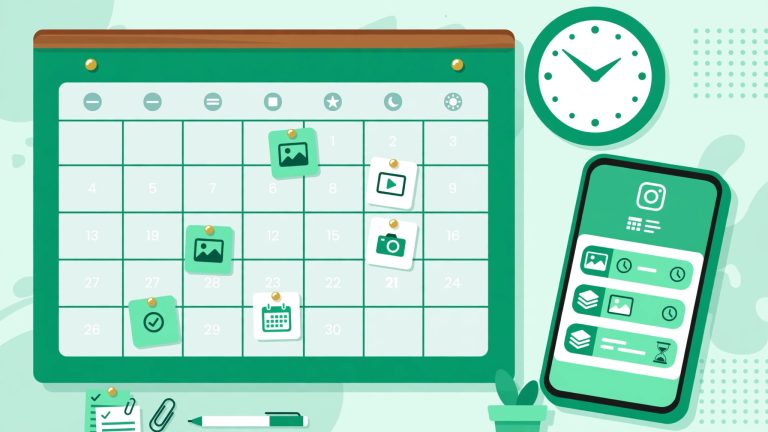
Theory is nice, but here is what a realistic week looks like for a creator playing the algorithm honestly. Post four to five Reels across the week, each with a two-second hook and one clear idea. Spend fifteen minutes a day replying to comments and engaging with accounts in your niche — not spammy “nice post” comments, but real replies that start conversations. Put up two to three Stories a day: polls, questions, behind-the-scenes clips. Once a week, open your analytics and note your top two posts by sends and your top two by saves, then plan next week’s content around what those winners have in common.
That routine takes maybe five to six hours a week, costs nothing, and compounds. Most creators who complain the algorithm hates them are not doing anything close to this — they post sporadically, never reply, and wonder why a dead account stays dead. The algorithm is a mirror: it reflects the effort and quality you put in.
How This Connects to Follower Growth
Here is the chain most creators miss: the algorithm does not give you followers directly — it gives you reach. Followers come from what happens after reach: someone watches your Reel, taps your profile, likes what they see, and hits follow. That means growth is a two-step game. Step one is algorithmic (watch time, sends, consistency). Step two is profile conversion: a clear bio, a recognizable niche, and a grid that tells a new visitor “follow me for more of this” in three seconds.
If your reach is growing but follows are flat, the problem is step two, not the algorithm. And if you want a small honest jumpstart while your content engine warms up, a free Instagram followers trial can seed initial social proof — just make sure the content waiting on your profile is worth following.
Bottom Line
The 2026 algorithm rewards one thing above all: content people finish and share. Watch time and sends for Reels, meaningful engagement for Feed, real interaction history everywhere. There are no secret levers, no best posting minute that doubles reach, no hashtag magic. Learn the signals, make content that earns them, post it consistently — and let the ranking do the rest.