Do Instagram Engagement Groups Work? The Honest Truth for 2026
Do Instagram engagement groups work? The short answer is yes for likes and comments, and no for real growth. A group can push your numbers up within an hour of posting, but the people engaging are rarely your audience, Instagram now weighs saves, shares, and watch time far more than raw likes, and Meta treats swapped engagement as spam. That is the trade-off in one sentence, and the rest of this guide explains why it matters before you join one.
What Are Instagram Engagement Groups?
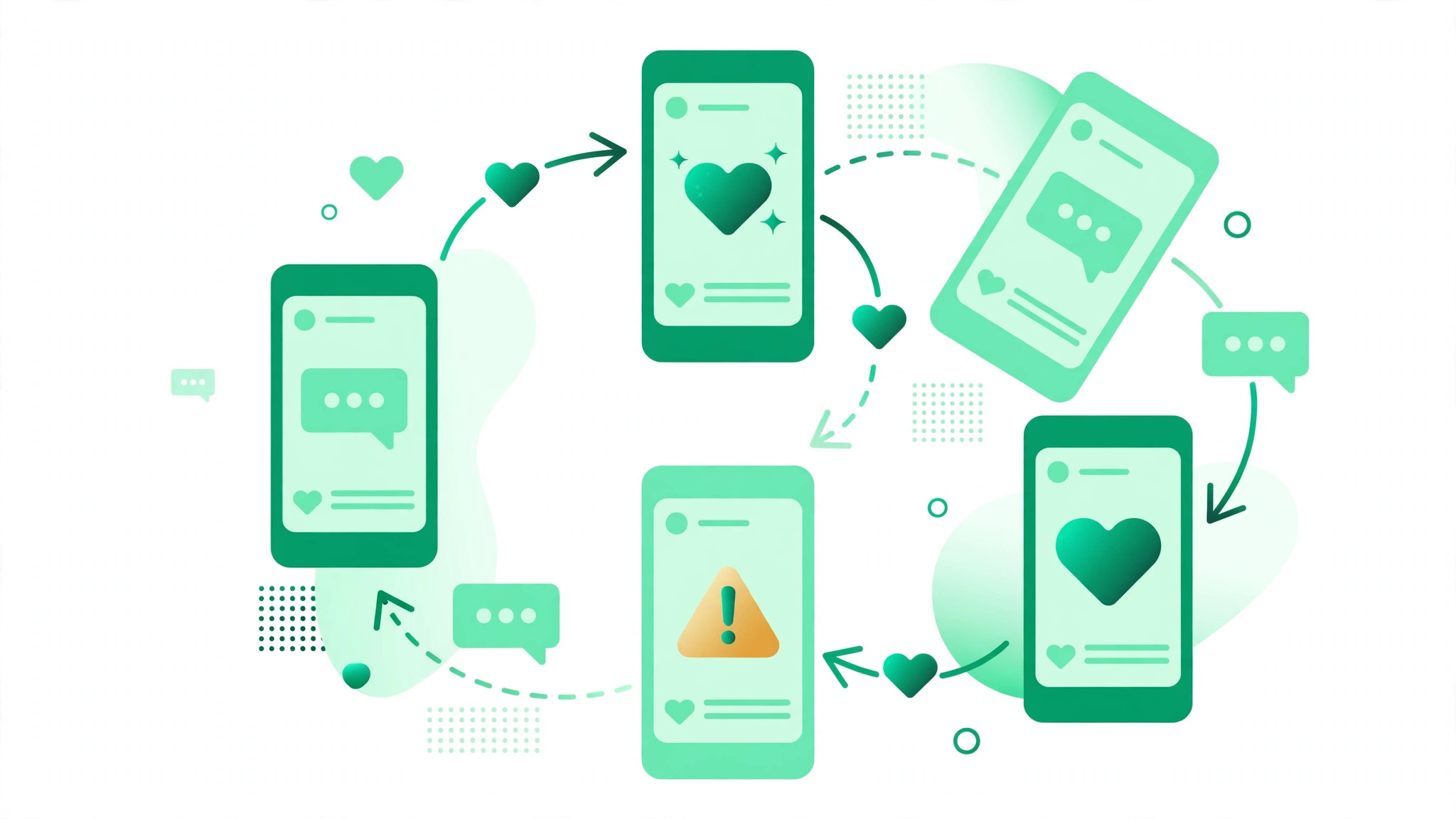
An Instagram engagement group, often called a pod, is a private group of users who agree to like and comment on each other’s posts. You post, drop the link in the group chat, and every member is expected to engage with it within a set window, usually 30 to 60 minutes. In return, you do the same for them.
The idea behind it is not made up. Instagram does weigh early engagement when it decides how far to push a post, so a burst of likes and comments in the first hour can signal that a post is worth showing to more people. Engagement groups exist to manufacture exactly that burst. The problem is that the signal they manufacture is only part of what Instagram measures, and the part they cannot fake is the part that decides real reach.
The Main Types of Engagement Groups
- Telegram groups: The large, open version. Groups can hold thousands of members, and bots run the rounds, check who completed their likes and comments, and remove people who skip them. Some are free, some charge for a paid tier.
- WhatsApp and Instagram DM pods: Smaller, usually 15 to 50 accounts in one niche. Comment pods often demand comments of a minimum length, because short generic comments count for less.
- Auto-engagement services: Paid services that log in to your account and like and comment automatically. These are the riskiest kind by far, because you hand over your password and the activity is automated.
How Instagram Engagement Groups Work
A typical round follows the same pattern. You publish your post and paste the link into the group chat. Every member has a window, often 30 to 60 minutes, to open the link, like it, and leave a comment of at least four or five words. An admin or a bot logs who showed up and who did not, and anyone who skips two or three rounds without a good reason gets warned and then removed.
That is the hidden price of joining: time. In a busy group you like and comment on dozens of posts per round, from accounts you would never follow, about topics your audience does not care about.
Do Instagram Engagement Groups Still Work in 2026?
It depends on what you mean by work. If work means more likes and comments, then yes, a group delivers what it promises. A 2020 study by researchers at NYU and Drexel looked at nearly 2 million Instagram posts shared in pods, most of them organized on Telegram, and found that pods did raise engagement, and that Instagram’s algorithm promoted the boosted posts further at the time.
If work means more reach to people who would actually follow you, the answer is mostly no, and the effect has weakened since that study for three reasons.
- Likes are only one signal. On its Creators site, Instagram lists watch time, retention, shares, likes, and comments as the signals it uses to predict who will like a Reel. A pod member who taps like and scrolls on adds a like, but no watch time and no shares.
- The engagement comes from the wrong people. Instagram says it learns from people with similar interests and shows a new Reel to a small group of non-followers first, then wider if it does well. If your likes come from travel, fitness, and fashion accounts while you post about baking, that is the crowd you are teaching it about.
- The pattern is easy to spot. The same small cluster of accounts liking and commenting on every post within minutes of upload is exactly the kind of coordinated behaviour Instagram’s systems are built to flag. Creators who have run pods report the same shape: a short sugar rush of higher engagement, then reach falling below where it started, sometimes for weeks after leaving the group.
Are Engagement Groups Against Instagram’s Rules?
Yes, in the way that matters. Meta’s spam policy, which covers Instagram, bans selling, buying, or exchanging engagement such as likes, shares, views, and follows. A pod is an exchange of engagement by design, so it falls squarely under that rule. Instagram has also said directly that pod activity violates its policies, telling TechCrunch when the 2020 study came out that it considers pods a breach of its rule against using a third-party app or service to generate fake likes, follows, or comments.
Instagram has acted on this before. In May 2018, Facebook removed ten large groups that hundreds of thousands of people used to trade Instagram likes and organize pods. In November 2018, Instagram started removing inauthentic likes, follows, and comments made through third-party apps, using machine learning to find the accounts that used them.
What Can Happen to Your Account
- Engagement removed: Likes and comments that Instagram judges inauthentic can disappear from your posts, as they have since 2018.
- Less reach: Content that breaks the rules is not recommended to people who do not follow you, and an account that keeps breaking them can lose recommendations for all its posts for a while. Professional accounts can check this in Account Status.
- Limited features or a disabled account: Instagram can take features away for a while, and for repeated breaches an account can be disabled, usually after a warning first.
Never give a growth service your password. Instagram’s Help Center says you should not use apps that offer likes and followers in exchange for your login details, and an app with your login can get complete access to your account. If you have used one, change your password and turn on two-factor authentication right away.
What Works Instead of Engagement Groups
What a pod promises, more engagement and more reach, you can get from people who actually care about your topic. It takes longer, but then every like, comment, and share actually helps you grow. For a full plan, start with our guide on how to get more followers on Instagram, which covers the habits that build a real audience instead of a borrowed one.
Make Posts People Send to a Friend
When someone sends your Reel to a friend in a DM, that is a share, one of the signals Instagram names for deciding who else sees a Reel. A post gets sent when it is useful, funny, or true enough that someone thinks of a friend. Keep it to one idea per Reel, hook people in the first three seconds, and use text on screen for people watching without sound.
Collaborate and Build a Real Peer Group
A collab post appears on every collaborator’s profile and in their followers’ feeds, so it reaches people who already follow an account like yours. One collab with the right account is worth more than a month of pod rounds. The honest version of an engagement group is a handful of creators in your niche who give feedback before you post, share your post when it fits their audience, and comment when they have something to say. No rounds, no quotas, no bots. A peer who comments because the post is good is normal engagement. A quota is an exchange of engagement, and that is the part Meta’s rules ban.
Use Hashtags That Match Your Real Reach
Mid-size, specific hashtags outperform giant generic ones for most accounts, because they put your post in front of people who are actually looking for your topic. Our free Instagram hashtag generator can help you find tags sized to your content. Reply to every comment within the first hour yourself, since that signals the conversation is live in a way a pod cannot fake, and post when your own Insights say your audience is online.
Already in a Group? How to Leave Cleanly
Leaving is easy, and cleaning up takes five steps. First, stop dropping links, leave the Telegram groups and Instagram group chats, and block the bots that message you. Second, secure your account: if you gave a growth service your login, change your password, turn on two-factor authentication, and revoke access for any third-party app you do not trust. Third, check Account Status on a professional account to see whether your content can be recommended to people who do not follow you. Fourth, reset your baseline. Your likes and comments will drop. That is your real number, and the one to grow from. In Insights, judge your posts by reach to non-followers, shares, and saves rather than likes. Fifth, put the hours you spent on rounds into posts for your real audience, replies, and your first collab.
The Bottom Line
Instagram engagement groups still work at the one thing they promise: more likes and comments. They do not work at the thing that matters: putting your posts in front of people who would follow you, buy from you, or hire you. They cost hours a week, teach the algorithm about the wrong audience, risk reduced reach and account restrictions under Meta’s spam policy, and can cost you brand deals when audience tools spot the pattern. Skip the pod. Spend those hours on one good Reel, one real collab, and replies to the people who already care, and if you want more ways to grow without shortcuts, BigFollowers has free tools and guides to help you build an audience that is actually yours.