Instagram Follower Quality vs Quantity: Why Engaged Followers Beat Big Numbers in 2026
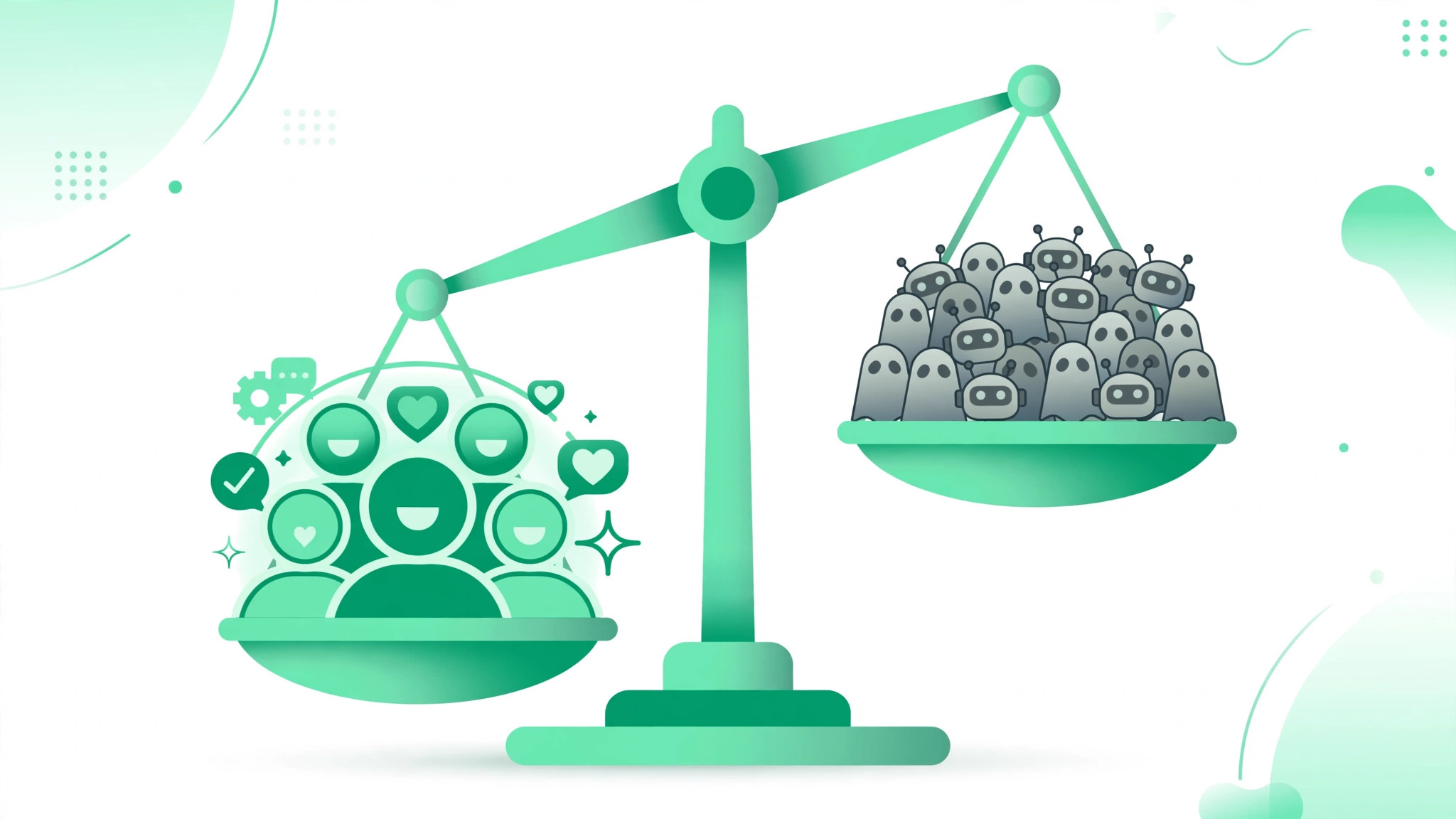
Direct answer: On Instagram in 2026, follower quality matters more than follower quantity. An account with 5,000 real, engaged followers will usually outperform an account with 50,000 passive or fake followers, because Instagram ranks content by how people react to it, not by how many people follow you. Quantity still has a role as social proof, but it cannot rescue an audience that never engages.
What Follower Quality Actually Means
Follower quality is not just about whether a follower is a real person. It is about relevance, activity, and intent. A high-quality follower fits your target audience, opens Instagram regularly, watches your Reels, and interacts through likes, comments, saves, and shares. A low-quality follower might be a real person who followed you once in 2019 and never opened the app again, or a bot account created in bulk to inflate someone else’s numbers.
Why Engagement Rate Is the Real Scoreboard
Engagement rate is simple to calculate: divide your total interactions on a post (likes, comments, saves, and shares) by your follower count, then multiply by 100. It is the single most useful diagnostic for follower quality, because it turns a vague feeling about your audience into a number you can track.
Industry data published by Sprout Social in 2026 shows a clear pattern across follower tiers. Nano accounts with 1,000 to 10,000 followers average around a 2.19 percent engagement rate. Micro accounts with 10,000 to 50,000 followers average about 0.99 percent. Macro accounts in the 50,000 to 500,000 range average roughly 0.86 percent. Smaller accounts engage better because their audiences are closer and more personal, while larger accounts naturally dilute.
Here is a comparison that makes the point concrete. Account A has 200,000 followers and a 0.3 percent engagement rate, which is about 600 interactions per post. Account B has 20,000 followers and a 4.5 percent engagement rate, which is about 900 interactions per post. Account B has ten times fewer followers but generates more real engagement, and that is exactly what brands and the algorithm notice. If your rate sits below 0.5 percent, that is a warning sign worth investigating. A rate above 3 percent is excellent for most accounts.
You can run a quick check on your own audience health with a free fake follower checker, which gives you an estimate of how much of your audience may be inauthentic. Use it as a starting point, not a final verdict, and pair it with your own Instagram Insights data.
How Fake and Inactive Followers Hurt Your Reach
Instagram head Adam Mosseri has said publicly that raw follower count is not a direct ranking factor. What the algorithm measures is follower behaviour: how many of your followers see your content and engage with it in the first window after posting. In January 2025, Mosseri confirmed the three ranking signals that matter most across the app: watch time, likes per reach, and sends per reach. All three are ratios, and a bloated follower list makes every ratio worse.
The damage works in several ways. Fake followers dilute your engagement rate, which is the metric brands check before paying for a partnership. They drag down your first-window signals, because Instagram samples your followers first and a sample full of ghosts produces silence. They waste your ad targeting and skew your Insights, so you make content decisions based on an audience that does not exist. And they damage trust: anyone who looks closely at a 100,000-follower account with 40 likes per post can see the mismatch instantly.
When Quantity Still Matters: Social Proof
Quality wins, but quantity is not worthless. Follower count still functions as social proof. A new visitor deciding whether to follow you will glance at the number, and an account with 12,000 followers looks more credible than one with 120, even if the smaller account has better engagement. The same applies to brand deals, media features, and collaborations, where a minimum follower threshold is often the first filter before anyone checks your engagement rate.
Quantity also matters in absolute terms at scale. One percent of one million followers is 10,000 people, which is a large audience by any standard. Ten percent of 1,000 followers is only 100 people. As accounts grow, engagement percentages naturally fall, and that is normal. The goal is not to keep a tiny account forever. It is to grow the number without destroying the ratio, so that each new thousand followers adds real people who actually care about what you post.
How to Judge Your Own Follower Quality
Start with your Insights. Open Instagram Insights and compare your average likes, comments, saves, and shares per post against your follower count. Then check your Story views: a healthy account typically sees Story views equal to roughly 5 to 15 percent of its follower count. If your Story views are far below that range, a large share of your audience is inactive.
Next, scan your follower list manually. Look for accounts with no profile picture, zero posts, usernames made of a name plus a long random number, and accounts following thousands of people while being followed by almost none. These are classic bot signals. Also check the “Flagged for review” section at the top of your Followers list, where Instagram itself surfaces accounts it has identified as spammy.
How to Grow Quality Followers Instead of Empty Numbers
Quality growth is slower, but it compounds. Post content that solves a specific problem for a specific audience, so the right people have a reason to follow. Use hashtags that match your niche rather than generic viral tags, because niche hashtags attract people who actually care about the topic. Reply to comments and DMs, because early engagement trains the algorithm to show your content to more people like your existing audience.
For a practical step-by-step plan, read our guide on how to get more followers on Instagram, which covers organic tactics that attract real people who stick around. You can also explore the free Instagram growth tools on BigFollowers to support your strategy with counters, hashtag ideas, and caption help.
Frequently Asked Questions
Is 1,000 engaged followers better than 10,000 inactive followers?
Yes, in almost every case. One thousand engaged followers generate more likes, comments, saves, and shares than ten thousand silent ones, and those interactions are what Instagram uses to decide how widely to distribute your content. The only thing the larger number wins is first-glance social proof.
What is a good Instagram engagement rate in 2026?
Anything above 3 percent is excellent, 1 to 3 percent is good, 0.5 to 1 percent is average, and below 0.5 percent signals a problem with audience quality, content relevance, or both. Rates vary by niche and account size, so compare yourself mainly against your own past performance.